
The first time a customer uses a new payment card at a Smart Store, they’re asked to enter their phone number before the door unlocks.
✅ Only required once per payment card. Future visits are as simple as tapping the same card.
We recognize this adds a one-time step for first-time customers. While some smart retail systems make phone numbers optional, we’ve deliberately taken a different approach because it allows us to support customers throughout the purchase journey. In practice, we’ve found that nearly all customers complete this step.
Unlike traditional retail, the purchase continues after the customer leaves. The system still needs to determine what was taken and calculate the final purchase amount. Collecting a phone number allows us to keep customers informed throughout the purchase process—not just after it’s finished.
Our Smart Stores are primarily located in residential buildings, workplaces, and other environments with a high percentage of returning customers. In these locations, the one-time verification provides ongoing value across future visits. As we expand into new environments, we’re continually evaluating this experience to ensure it strikes the right balance between convenience and the benefits it enables.
1. Reassurance while purchases are processing
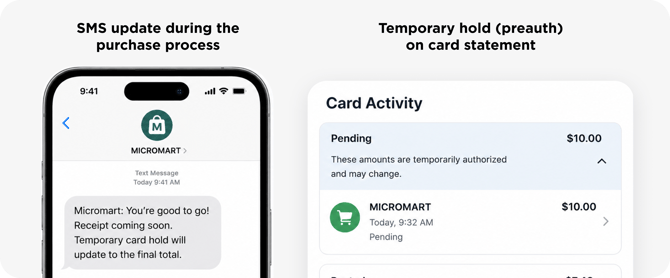
Unlike a traditional vending machine, Smart Stores determine what was taken after the door closes. Because the final purchase amount isn’t known immediately, a temporary authorization is placed on the customer’s payment card until processing is complete.
Many banking apps display temporary authorizations in the same way as completed purchases. From the customer’s perspective, it can appear as though they’ve already been charged, even though their purchase is still being processed.
To reduce that confusion, we immediately send a text message explaining what’s happening, followed by an itemized receipt once processing is complete. This proactive communication helps reassure customers and answers one of the most common questions.
2. Easier customer support
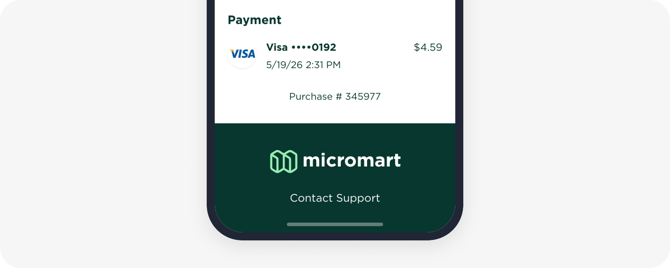
The phone number makes it easier for customers and operators to communicate when support is needed.
Customers can quickly get help if they have a question about their purchase, while operators can identify the transaction and resolve issues more efficiently. It also enables features such as Revenue Protect, allowing operators to notify customers and recover payments when a transaction cannot be completed successfully.
3. Digital receipts & feedback
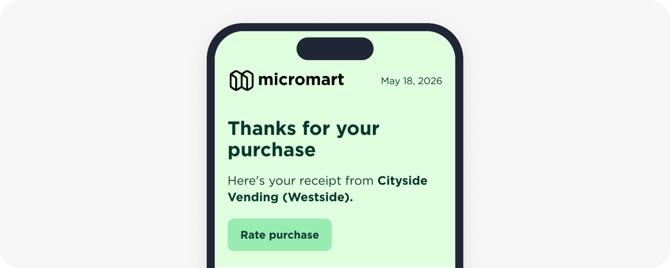
Every customer receives an itemized digital receipt showing exactly what they purchased and the final amount charged.
Each receipt also gives customers the opportunity to rate their shopping experience and provide feedback, creating a valuable feedback loop that helps operators identify issues early, measure customer satisfaction, and continuously improve their locations.
4. Loyalty & future purchases
Once a payment card has been linked, future visits require nothing more than tapping the same card.
The linked phone number also enables loyalty rewards, personalized promotions, and future customer experiences—such as targeted discounts for returning shoppers—without requiring customers to register again.
5. Improved trust & security
Associating a phone number with a payment card helps protect both customers and operators by reducing fraudulent activity, helping investigate disputed transactions, and providing a reliable way to communicate when questions arise.